
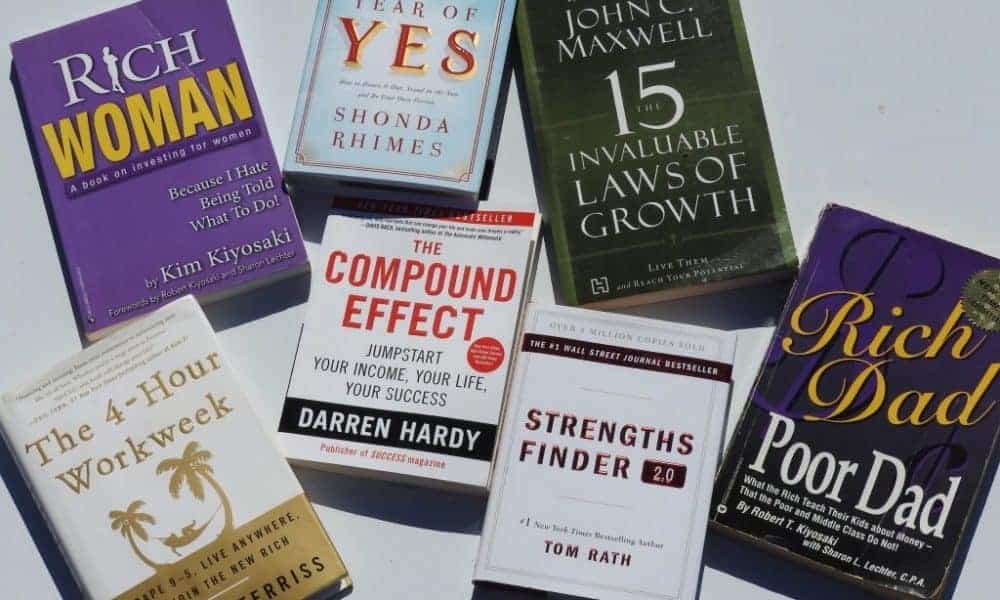
“Not all readers are leaders, but all leaders are readers.” — Harry S. Truman.
Imagine waking up with the clarity of a CEO, the discipline of an elite athlete, and the financial wisdom of a seasoned investor all absorbed not through years of trial and error, but through the distilled insights of those who have already walked the path. That is precisely what the right personal development book can do. It can collapse decades of lived experience into hours of focused reading and hand you a blueprint for a better life.
In a world overflowing with content, noise, and distraction, books remain one of the most powerful tools for self-improvement. They demand your full attention, reward your patience, and — when chosen wisely — reshape the way you think, decide, and act. Whether you are a student mapping out your future, a professional climbing the career ladder, an entrepreneur building something meaningful, or simply someone hungry to grow, the right personal development books can serve as your most trusted mentors.
This guide curates the best books for personal development across every major life domain — mindset, productivity, finances, confidence, and leadership. More importantly, it shows you how to read them for maximum impact, so knowledge becomes transformation rather than just another item on your shelf.
Why Reading Personal Development Books Matters
Before diving into the list, it is worth asking: why books? We live in an era of podcasts, YouTube tutorials, and online courses. Yet books remain irreplaceable. Here is why investing time in self-improvement books pays compounding dividends.
They Rewire Your Mindset and Thinking Patterns
Your current outcomes are largely the product of your current thinking. Personal development books introduce you to frameworks, perspectives, and mental models you would not encounter in everyday life. Reading about Carol Dweck’s growth mindset research, for example, does not just inform you – it begins to shift how you respond to failure, criticism, and challenge.
They Build Discipline and Self-Awareness
Understanding yourself – your triggers, your defaults, your blind spots – is the foundation of all personal growth. The best self-help books create a mirror, forcing you to confront uncomfortable truths and giving you the language to articulate what needs to change.
They Enhance Productivity and Focus
In an age of chronic distraction, productivity has become a superpower. Books like Deep Work by Cal Newport give you not just inspiration but proven systems to reclaim your focus and do work that actually matters.
They Provide Proven Frameworks for Success
Rather than reinventing the wheel, personal development books give you battle-tested frameworks. The 7 Habits, the Atomic approach to habit formation, the Pareto Principle – these are not just theories. They are practical operating systems used by millions of high performers worldwide.
They Offer Insider Access to Exceptional Minds
Where else do you get direct access to the thinking of Warren Buffett, David Goggins, or Simon Sinek? Books for success are one of the great democratic levellers – the same wisdom available to the world’s top achievers is available to you for the cost of a paperback.
How to Choose the Right Personal Development Book
Not every book is right for every person at every moment. Choosing strategically amplifies results.
- Define your primary goal. Are you trying to build better habits, grow wealth, manage anxiety, lead a team, or launch a business? Start with a book directly aligned to your current challenge.
- Consider your skill level. Beginners benefit most from accessible, story-driven books. More experienced readers can tackle dense, research-heavy frameworks.
- Match your learning style. If you love storytelling, choose books rich in narrative. If you prefer data and models, go for research-backed titles.
- Think about relevance, not prestige. A book recommended by everyone is not necessarily the book you need right now. Relevance to your current season of life matters more than popularity.
- One at a time. The biggest mistake most readers make is accumulating books rather than absorbing them. Choose one. Finish it. Apply it.
Best Books for Personal Development: The Core Reading List
These ten titles represent the gold standard of top personal growth books – books that have transformed millions of lives across cultures, professions, and generations.
1. Atomic Habits – James Clear
Summary: James Clear argues that extraordinary results come not from massive, dramatic change but from the aggregation of tiny, consistent improvements. A one percent improvement every day becomes 37 times better in a year. Atomic Habits is a masterclass in the science and strategy of habit formation.
Key Lessons:
- Identity-based habits: become the type of person who does the thing, not just someone trying to do it.
- The Four Laws of Behavior Change: make it obvious, attractive, easy, and satisfying.
- Environment design beats willpower every time.
- Habit stacking: attach new habits to existing ones for seamless integration.
Best For: Anyone struggling to build or break habits – professionals, students, and entrepreneurs who want a practical, science-backed system rather than motivational fluff.
2. The 7 Habits of Highly Effective People – Stephen R. Covey
Summary: First published in 1989 and still selling millions of copies annually, Covey’s landmark work presents a principle-centered approach to personal and professional effectiveness. It moves from dependence to independence to interdependence – a journey toward true maturity.
Key Lessons:
- Be proactive: take responsibility for your responses to any situation.
- Begin with the end in mind: live and work with a clear sense of purpose.
- Think win-win: abundance is not a zero-sum game.
- Sharpen the saw: renew yourself physically, mentally, emotionally, and spiritually.
Best For: Professionals and leaders seeking a timeless, values-driven framework for long-term effectiveness in both career and relationships.
3. Think and Grow Rich – Napoleon Hill
Summary: Based on over 20 years of research studying the habits of America’s most successful people, Napoleon Hill distills 13 principles of success centered on the power of desire, faith, and persistent thought. Published in 1937, its core philosophy remains astonishingly relevant.
Key Lessons:
- Burning desire is the starting point of all achievement.
- The mastermind principle: surround yourself with aligned, ambitious people.
- Autosuggestion and the subconscious mind as tools for shaping belief.
- Transmuting negative experiences into fuel for success.
Best For: Entrepreneurs, aspiring leaders, and anyone who needs to build a stronger belief in what they are capable of achieving.
4. The Power of Now – Eckhart Tolle
Summary: Tolle’s spiritual masterpiece challenges the reader to recognise that most human suffering is created by the thinking mind — particularly its obsession with the past and anxiety about the future. True peace, he argues, is only accessible in the present moment.
Key Lessons:
- The “pain-body”: how accumulated emotional pain perpetuates itself through thought.
- Separating your identity from your thinking mind.
- Presence as the ultimate form of intelligence.
- Practical techniques for anchoring attention in the now.
Best For: Anyone dealing with stress, anxiety, overthinking, or a persistent sense that life is happening somewhere else — in the past or the future.
5. Rich Dad Poor Dad – Robert T. Kiyosaki
Summary: Kiyosaki uses the contrast between two father figures — his biological, highly educated “Poor Dad” and his friend’s entrepreneurial “Rich Dad” — to illustrate profoundly different relationships with money, work, and wealth-building.
Key Lessons:
- The rich do not work for money; they make money work for them.
- Financial literacy is a life skill schools rarely teach.
- The difference between assets (things that put money in your pocket) and liabilities (things that take it out).
- Building passive income streams as the foundation of financial freedom.
Best For: Young professionals, students, and anyone who wants to fundamentally rethink their relationship with money and build a path to financial independence.
6. Deep Work – Cal Newport
Summary: Newport distinguishes between “deep work” (cognitively demanding, distraction-free focus) and “shallow work” (logistical, low-value tasks). In an economy that rewards cognitive performance, the ability to do deep work is becoming simultaneously rarer and more valuable.
Key Lessons:
- The Deep Work Hypothesis: the ability to focus intensely is the key skill of the 21st century.
- Four philosophies of deep work: monastic, bimodal, rhythmic, and journalistic.
- Scheduling depth: protect your highest-value hours ruthlessly.
- Quit social media (or dramatically restructure your relationship with it).
Best For: Knowledge workers, writers, developers, academics, and anyone whose income depends on high-quality thinking and concentrated output.
7. Can’t Hurt Me – David Goggins
Summary: Navy SEAL, ultramarathon runner, and motivational force David Goggins shares one of the most remarkable life transformations ever documented. From an abused, overweight young man with a learning disability to one of the world’s greatest endurance athletes, Goggins’ story is a raw, unfiltered exploration of human potential.
Key Lessons:
- The 40% Rule: When your mind says you are done, you are only at 40% of your actual capacity.
- Callusing the mind through repeated voluntary discomfort.
- Accountability mirror: brutal self-honesty as the first step to change.
- Most people live in their comfort zone – suffering strategically expands yours.
Best For: Those who need a hard mental reset, anyoDone dealing with self-doubt or complacency, and readers who respond to intensity over theory.
8. The Subtle Art of Not Giving a F*ck – Mark Manson
Summary: In a refreshing counter-punch to the relentless positivity of conventional self-help, Manson argues that the pursuit of happiness as a goal is self-defeating. Instead, he advocates choosing the right things to care about – and deliberately not caring about everything else.
Key Lessons:
- The “feedback loop from hell”: trying to feel good about feeling bad makes it worse.
- You are always choosing what to give your limited “f*cks” to – choose deliberately.
- Embracing struggle and failure as the true path to meaning.
- Responsibility versus blame: You may not control what happens, but you control your response.
Best For: Millennials and Gen Z readers who are burned out by toxic positivity, people-pleasers, perfectionists, and anyone who wants an honest, no-nonsense approach to meaning and priorities.
9. Mindset: The New Psychology of Success – Carol S. Dweck
Summary: Stanford psychologist Carol Dweck presents decades of research on one foundational question: do you believe your abilities are fixed, or that they can be developed? Her answer – and its implications — is one of the most important ideas in modern psychology.
Key Lessons:
- Fixed mindset vs. growth mindset: two fundamentally different ways of experiencing effort, failure, and feedback.
- Praising effort over intelligence builds resilience; praising intelligence creates fragility.
- Mindset is not permanent — it can be changed with awareness and practice.
- Growth mindset is especially critical in education, parenting, sports, and business.
Best For: Parents, educators, coaches, managers, and anyone who wants to understand why some people grow through adversity while others are crushed by it.
10. Start With Why – Simon Sinek
Summary: Sinek’s golden circle framework — Why, How, What — explains why some leaders and organisations inspire while others merely inform. His central thesis: people do not buy what you do; they buy why you do it.
Key Lessons:
- The Golden Circle: most communicate from the outside in (What → How → Why); inspiring leaders start from the inside out (Why → How → What).
- Purpose-driven leadership creates loyalty, not just customers or employees.
- Clarity of why attracts those who share your values.
- Applied to personal life: know your own “why” before making major decisions.
Best For: Leaders, entrepreneurs, marketers, and anyone who wants to communicate more powerfully and live and work with a greater sense of purpose.
Best Books for Specific Goals
Not sure where to start? Match your current priority to the right category.
Productivity and Focus
- Deep Work – Cal Newport
- Atomic Habits – James Clear
- Getting Things Done – David Allen
- The One Thing – Gary Keller
Financial Growth
- Rich Dad Poor Dad – Robert Kiyosaki
- Think and Grow Rich – Napoleon Hill
- The Psychology of Money – Morgan Housel
- I Will Teach You to Be Rich – Ramit Sethi
Confidence and Mindset
- Mindset – Carol S. Dweck
- Can’t Hurt Me – David Goggins
- The Subtle Art of Not Giving a F*ck – Mark Manson
- Daring Greatly – Brené Brown
Leadership
- The 7 Habits of Highly Effective People – Stephen R. Covey
- Start With Why -Simon Sinek
- Leaders Eat Last -Simon Sinek
- Dare to Lead – Brené Brown
Entrepreneurship
- Think and Grow Rich – Napoleon Hill
- Start With Why – Simon Sinek
- The $100 Startup – Chris Guillebeau
- Zero to One – Peter Thiel
Best Personal Development Books for Beginners
If you are new to the world of self-improvement books and want high impact without overwhelming complexity, start here:
- Atomic Habits – Accessible, practical, immediately actionable. No jargon.
- Rich Dad Poor Dad – Written in simple narrative style; transforms how you see money.
- The Subtle Art of Not Giving a F*ck – Conversational, funny, and disarmingly honest.
- Mindset – Clearly written, research-backed, and life-changing in its simplicity.
- Start With Why – Short, compelling, and deeply applicable to career and life decisions.
These five books collectively address your habits, money, mindset, purpose, and priorities — a complete foundation for anyone beginning their personal development journey.
How to Read Personal Development Books for Maximum Impact
Reading is only the beginning. The gap between consuming ideas and changing your life lies in what you do after you close the book.
Take Active Notes
Do not just highlight. Write in the margins. Keep a dedicated reading journal. Summarise each chapter in your own words. Teaching yourself the material cements it far more deeply than passive reading.
Apply Lessons Immediately
Do not wait until you finish the book. If Chapter 3 introduces a morning routine, start it tomorrow. Immediate application beats perfect preparation every time.
Revisit Key Ideas
Return to your notes and key passages at least once a month. Repetition is how ideas move from intellectual awareness into genuine belief and behaviour.
Set Reading Goals
Aim for a specific number of pages per day — even 20 pages daily produces over a dozen books per year. Attach your reading to an existing routine (morning coffee, lunch break, bedtime) to build consistency.
Avoid Passive Reading
If you are reading on autopilot and cannot recall what the last chapter was about, you are wasting time. Slow down. Engage. Ask “how does this apply to my life?” after every major idea.
Common Mistakes When Reading Self-Help Books
Even avid readers fall into these traps — and they explain why so many people consume dozens of books without meaningfully changing their lives.
- Consuming without acting. Reading about discipline does not build it. Reading about habits does not create them. Information without action is entertainment, not transformation.
- Reading too many books at once. Jumping between five books means absorbing none of them properly. Finish one. Let it settle. Then move to the next.
- Treating books as motivation sources. Motivation fades. Discipline built through applied practice does not. If you only pick up a book when you feel uninspired, you are using it as a crutch, not a tool.
- Skipping implementation. Most personal development books contain practical exercises, frameworks, and challenges. Skipping them is like buying gym equipment and using it as a clothes rack.
- Chasing the next book instead of living the current one. There is always a newer, more popular title. But the book that transforms you is the one you actually apply — not the one on your wish list.
How to Turn Knowledge into Lasting Results
Knowledge, even excellent knowledge, is inert. Results require the following:
Build Systems, Not Goals
Goals tell you where you want to go. Systems are how you get there. After reading a book, identify the one system or habit it recommends most strongly, and install it immediately.
Take Consistent, Imperfect Action
Waiting to feel ready is waiting to fail. Action creates momentum. Imperfection beats perfect inaction every time. Start before you feel prepared.
Track Your Progress
What gets measured gets managed. Keep a simple journal, habit tracker, or progress log. Seeing your consistency reinforced on paper is one of the most underrated motivators available.
Reflect and Adjust
Monthly, ask yourself: What is working? What isn’t? What do I need to change? Personal development is not a linear path — it is a cycle of action, reflection, and refinement.
Find Accountability
Share what you are learning with a friend, mentor, or community. Teaching accelerates understanding. Accountability accelerates action. Both compounds over time.
Final Thoughts: Books Are Tools, Not Magic
The world’s greatest personal development library, left unread on a shelf, accomplishes nothing. Read, applied inconsistently, it produces fleeting inspiration. But a single book, read with intention and applied with discipline, has the power to fundamentally alter the trajectory of your life.
The most successful people in the world — from Warren Buffett (who reads 500 pages a day) to Oprah Winfrey (who credits books with transforming her life) — treat reading as a non-negotiable practice, not an occasional luxury. They understand that investing in knowledge consistently is the highest-return investment available.
You do not need to read all ten books on this list this year. You need to read one. Finish it. Apply what it teaches. Then pick the next one.
The books have been written. The wisdom is accessible. The only question that remains is whether you will act on it.
Start Your Journey Today
Pick one book from this list. Not the most impressive title. Not the most popular one. The one that speaks most directly to where you are right now and where you genuinely want to go.
Order it today. Block 20 minutes into tomorrow’s schedule. Take notes. Apply the first lesson before you finish the first chapter.
Learning is not passive. Growth is not automatic. But for those who read with purpose and act with consistency, the transformation is not just possible — it is inevitable.
Your next chapter begins with the next book you open.
Want to continue your personal development journey? Explore GLS’s free online courses in leadership, productivity, mindset, and professional skills — built to complement your reading with structured, expert-led learning.