
10 Free Ways to Improve Your Skills Online
Tue, 01 Sep 2026

Follow the stories of academics and their research expeditions
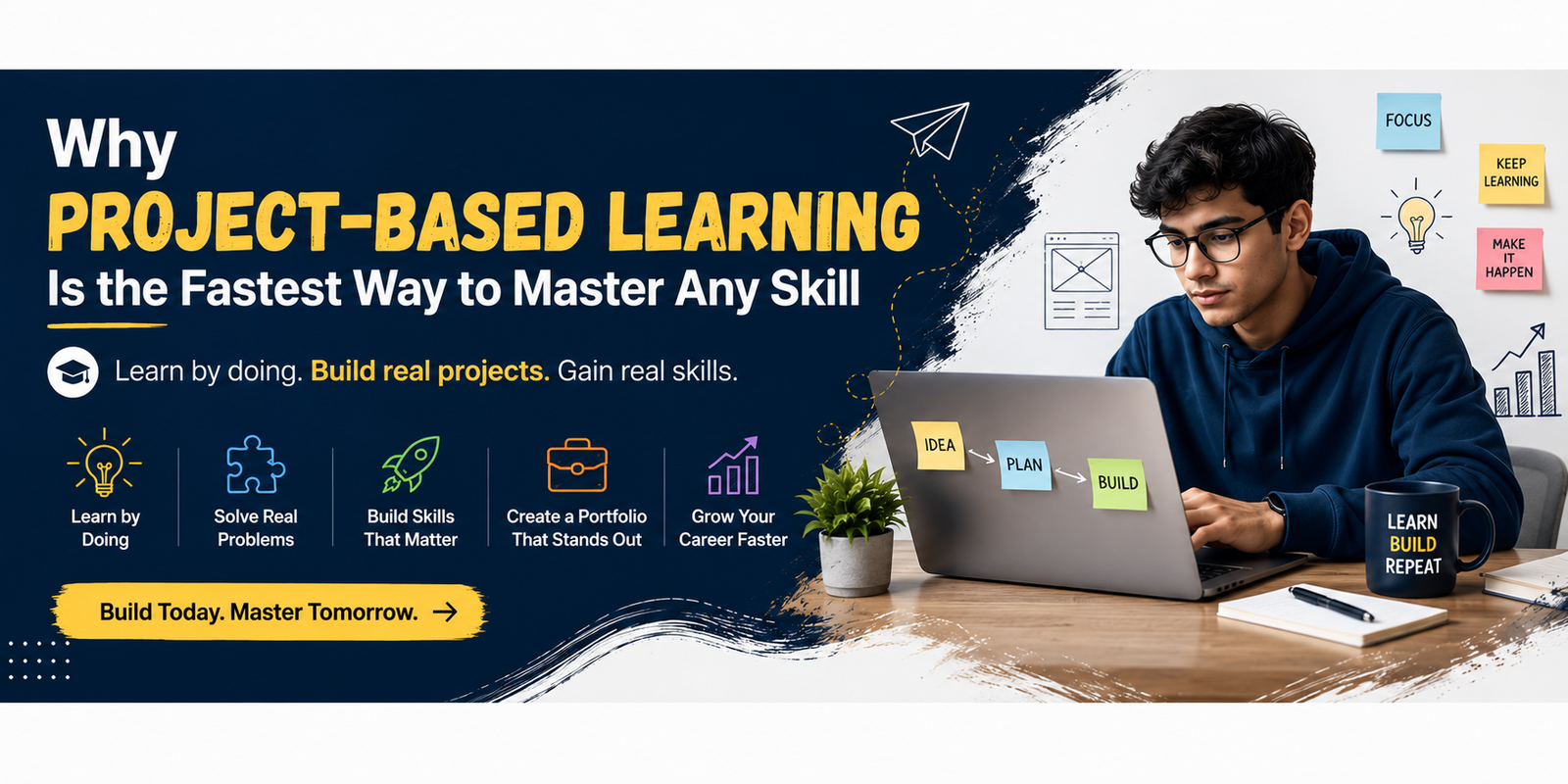
Have you ever completed an online course only to realize that you remembered very little just a few weeks later? You're not alone. Many learners spend hours watching lessons but struggle to apply what they've learned in real-world situations.
The difference between simply learning and truly mastering a skill is practice. Project-based learning transforms knowledge into experience by encouraging learners to build something meaningful while they study. Whether it's creating a website, designing a logo, developing a mobile app, or writing a business plan, every project helps reinforce concepts through hands-on experience.
Project-based learning is an educational approach where students gain knowledge by completing practical tasks instead of only studying theory. Rather than memorizing information for an exam, learners solve real problems and create tangible results.
For example, someone learning web development could build a personal portfolio website. A marketing student might create a social media campaign, while a business learner could prepare a startup proposal. These activities closely resemble the work professionals perform every day.
Reading books and watching videos provide valuable knowledge, but applying that knowledge creates lasting understanding. When you build something yourself, you're forced to think critically, solve problems, and make decisions. These experiences strengthen memory and improve confidence.
Mistakes also become valuable learning opportunities. Instead of viewing errors as failures, project-based learning treats them as part of the learning process. Every challenge solved helps you become a more capable professional.
Today's employers value practical experience just as much as qualifications. A portfolio of completed projects demonstrates initiative, creativity, and problem-solving abilities far better than simply listing completed courses on a resume.
Projects also help develop important workplace skills such as communication, collaboration, planning, time management, and adaptability. These skills are valuable across nearly every profession.
Beginning with project-based learning doesn't have to be difficult.
Start by learning the fundamentals of a subject through a structured course. Once you understand the basics, choose a small project that challenges you without feeling overwhelming. Focus on completing it rather than making it perfect.
As your confidence grows, gradually take on larger and more complex projects. Seek feedback from instructors, mentors, or peers and use their suggestions to improve your work. Every completed project becomes another step toward mastery.
Many learners delay starting projects because they believe they need to know everything first. In reality, learning happens during the building process.
Avoid constantly switching between courses without finishing anything. Don't compare your beginner projects to someone else's years of experience. Progress comes from consistency, not perfection.
The fastest way to master any skill is to use it.
Project-based learning transforms theory into practical experience, builds confidence, and prepares you for real-world challenges. Every project you complete becomes proof of your growing abilities and moves you one step closer to achieving your personal and professional goals.
Whether you're a student, a working professional, or someone exploring a new career path, building projects is one of the smartest investments you can make in your future.
Start learning, start building, and let every project bring you closer to success.
Tue, 01 Sep 2026
Tue, 01 Sep 2026

Tue, 01 Sep 2026
Leave a comment