
10 Free Ways to Improve Your Skills Online
Tue, 01 Sep 2026

Follow the stories of academics and their research expeditions
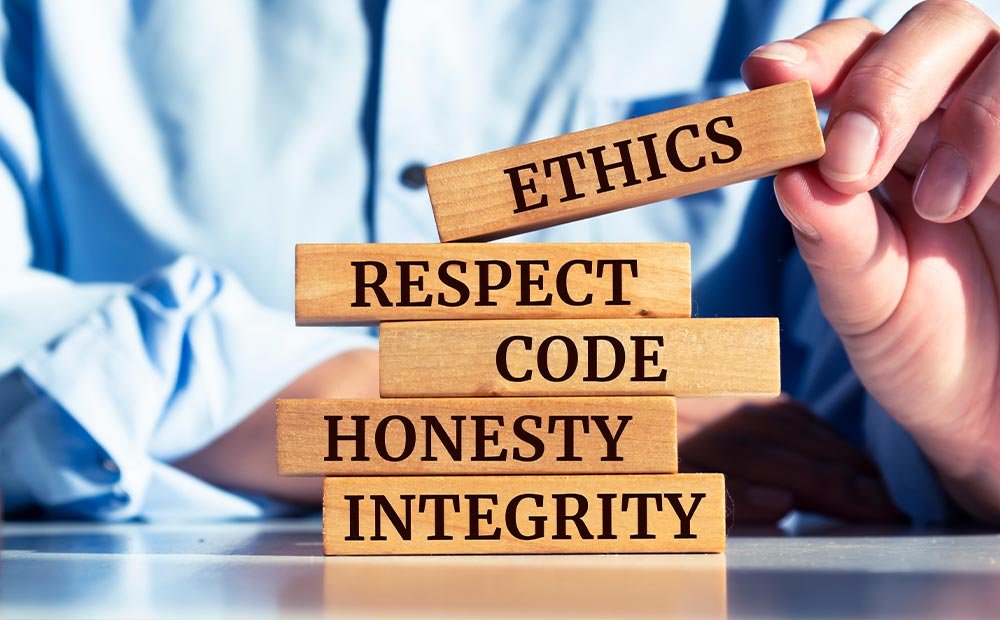
Business ethics often gets treated as an abstract topic — something for corporate mission statements or compliance training, rather than day-to-day decision-making. In practice, it's the opposite. Business ethics shows up constantly: in how a manager handles a conflict of interest, how a sales team represents a product, how a company treats an underperforming employee, or how leadership responds when cutting corners would be easier than doing things properly.
The scale of the issue is significant. The Ethics & Compliance Initiative's Global Business Ethics Survey, one of the longest-running studies of workplace conduct, found that 65% of employees globally reported observing misconduct at work in its most recent large-scale survey, up from 60% a few years earlier. At the same time, research from Ethisphere has found that companies with strong ethical governance and compliance leadership have outperformed the broader market over a five-year period. Ethics, in other words, is not just a values issue — it's a performance issue.
This guide breaks down what business ethics actually means, why it matters, the core principles behind it, and how organisations put ethical practice into action.
Definition
Business ethics refers to the principles and standards that guide behaviour in the business world — covering how organisations and individuals within them make decisions, treat people, and conduct themselves in situations where right and wrong aren't always obvious.
It applies at every level: from an individual employee deciding whether to report a colleague's mistake, to a leadership team deciding how transparently to communicate a product issue to customers.
Ethics vs Compliance
These terms are often used interchangeably, but they're not the same:
A company can be fully compliant and still act unethically — for example, by using confusing pricing that technically follows disclosure laws but is designed to mislead customers.
Ethics vs Corporate Social Responsibility (CSR)
Business ethics and CSR are related but distinct:
Ethical conduct is generally a foundation for credible CSR; a company with poor internal ethics will struggle to be taken seriously on broader social responsibility claims.
Trust and Reputation
Trust, once damaged, is difficult to rebuild. Customers, partners, and investors consistently favour organisations they perceive as honest and fair, and reputational damage from ethical failures can outlast the incident itself by years.
Employee Retention and Culture
Ethical culture also affects the workforce directly. Employees who witness misconduct without consequences often lose confidence in leadership, which can affect engagement, morale, and turnover. A workplace where ethical standards are consistently upheld tends to build stronger trust between employees and management.
Did You Know? The same Global Business Ethics Survey found that pressure to compromise ethical standards has remained persistently high, with roughly three in ten employees reporting they've felt such pressure at work.
Financial and Legal Risk
Ethical failures carry real financial consequences — regulatory fines, legal settlements, lost contracts, and the cost of rebuilding damaged trust. Organisations with strong ethics and compliance programs tend to identify and address problems earlier, before they escalate into costly public failures.
While specific codes of conduct vary by industry and organisation, most ethical frameworks are built around a few consistent principles.
Integrity
Acting consistently with stated values, even when no one is watching or when doing so is inconvenient.
Fairness
Treating employees, customers, and partners equitably — avoiding favouritism, discrimination, and exploitation of power imbalances.
Transparency
Being honest and clear in communication, particularly around information that affects others' decisions, such as pricing, product risks, or company performance.
Accountability
Taking ownership of decisions and their consequences, rather than deflecting blame or hiding mistakes.
Respect
Treating people — employees, customers, competitors, and communities — with basic dignity and consideration, regardless of position or leverage.
Quick Tip: A simple test for any business decision is to ask: "Would I be comfortable if this decision, and the reasoning behind it, were made fully public?" If the answer is no, it's worth reconsidering.
Conflicts of Interest
These arise when personal interests could improperly influence professional decisions — for example, a manager hiring a family member without disclosing the relationship, or an employee accepting gifts from a vendor they oversee.
Confidentiality and Data Handling
Employees regularly handle sensitive information — customer data, financial records, trade secrets. Ethical handling means protecting that information appropriately and not using it for personal gain or sharing it inappropriately.
Fair Treatment and Discrimination
Ensuring hiring, promotion, and day-to-day treatment decisions are based on merit and fairness rather than bias, whether conscious or unconscious.
Pressure to Compromise Standards
Employees sometimes face pressure — from deadlines, targets, or supervisors — to cut corners, misrepresent results, or overlook problems. How organisations respond to this pressure, and whether they protect employees who resist it, is a strong indicator of actual ethical culture.
Codes of Conduct
A written code of conduct sets clear expectations for behaviour and decision-making. Effective codes are specific enough to guide real decisions, not just generic statements of good intent.
Ethics Training
Training helps employees recognise ethical dilemmas before they become serious problems, and gives them practical frameworks for handling difficult situations — particularly ones with no clear "right" answer.
Reporting Channels and Whistleblower Protection
Employees need a safe, confidential way to report concerns without fear of retaliation. Research consistently shows that fear of negative consequences is one of the biggest reasons employees stay silent about misconduct they've witnessed.
Leadership's Role
Ethical culture is shaped disproportionately by leadership behaviour. Employees generally model what leaders actually do, not just what policies say. Leaders who visibly uphold ethical standards — including when it's costly or inconvenient — set the tone for the rest of the organisation.
When facing an ethical dilemma at work, the following steps can help clarify the right path forward:
| Mistake | Why It Hurts | Better Approach |
|---|---|---|
| Treating ethics as a compliance checkbox | Misses the deeper cultural issue | Build ethics into daily decision-making, not just policy documents |
| No confidential reporting channel | Employees stay silent about misconduct | Provide clear, protected reporting options |
| Leadership exempting itself from standards | Undermines trust in the entire program | Hold leadership to the same standards as everyone else |
| One-time training with no follow-up | Standards fade from memory | Reinforce ethics through ongoing training and real examples |
| Punishing whistleblowers, even subtly | Discourages future reporting | Actively protect and support employees who report concerns |
Q1: What is business ethics in simple terms? Business ethics is the set of principles that guide right and fair conduct in business decisions, covering everything from how employees are treated to how companies communicate with customers.
Q2: Why is business ethics important? It builds trust with customers and employees, reduces legal and financial risk, and supports a healthier, more sustainable workplace culture over the long term.
Q3: What are the core principles of business ethics? Most frameworks centre on integrity, fairness, transparency, accountability, and respect.
Q4: What is the difference between ethics and compliance? Compliance means following laws and policies; ethics goes further, covering what is right or fair even when not explicitly required by law.
Q5: What are common examples of unethical business behaviour? Examples include misleading marketing, favouritism in hiring or promotion, mishandling confidential data, and retaliating against employees who report concerns.
Q6: How do companies build an ethical culture? Through clear codes of conduct, regular ethics training, protected reporting channels, and leadership that visibly models ethical behaviour.
Q7: Can a business be both profitable and ethical? Yes. Research has linked strong ethical governance to stronger long-term financial performance, partly because it reduces legal risk and builds lasting stakeholder trust.
Q8: What should I do if I witness unethical behaviour at work? Most organisations offer a confidential reporting channel — through HR, an ethics hotline, or a designated compliance officer. Document what you observed factually before reporting.
Q9: Is business ethics the same as corporate social responsibility (CSR)? No. Business ethics focuses on conduct and decision-making, while CSR focuses more broadly on a company's impact on society and the environment. The two are related but distinct.
Q10: How can I improve my own ethical decision-making at work? Use a structured framework — identify the issue, gather facts, consider who's affected, and evaluate your options against principles like fairness and transparency before acting.
Business ethics isn't a one-time training module — it's a habit of thinking that gets sharper with practice and grounded, practical learning. Whether you're building a code of conduct for your team, navigating a difficult workplace dilemma, or preparing to step into a leadership role, developing a clear ethical framework will serve you at every stage of your career. Explore related courses and learning paths on Global Learn Space to build the skills and confidence to make sound, defensible decisions when it matters most.
Tue, 01 Sep 2026
Tue, 01 Sep 2026

Tue, 01 Sep 2026
Leave a comment